
Discover the Rich History of Baklava
Baklava, a delectable dessert cherished across the Middle East, Balkans, Greece, and Iran, boasts a complex and multicultural history. Its roots trace back to the ancient civilizations of Mesopotamia and the Middle East. Early records suggest that the Assyrians were among the first to create a version of this layered pastry using unleavened bread, nuts, and honey, as early as 2000 to 800 BC. This early form of baklava was often prepared for special occasions and celebrations.
As history unfolded, the technique of layering pastries evolved significantly during the Byzantine Empire between the 4th and 15th centuries. This era saw the pastry getting closer to its modern form. It was, however, during the Ottoman Empire, from the 15th century until the early 20th century, that baklava reached its current form. The kitchens of Topkapi Palace in Istanbul were instrumental in refining baklava into the sophisticated dessert we know and love today. The Ottomans spread this delightful pastry across their empire, including regions like Turkey, Greece, the Balkans, and the Caucasus, each adding their unique twist based on local tastes and available ingredients.
The Modern Baklava and Its Cultural Variations
Today, baklava is not only enjoyed in Turkey, Iran, and Greece but has also become a beloved dessert worldwide. Each region has contributed to its evolution, incorporating local ingredients and flavors. For instance, while pistachios are commonly used in Turkey, Greeks often favor walnuts, and Iranians might infuse the syrup with rose water or cardamom for an aromatic touch.
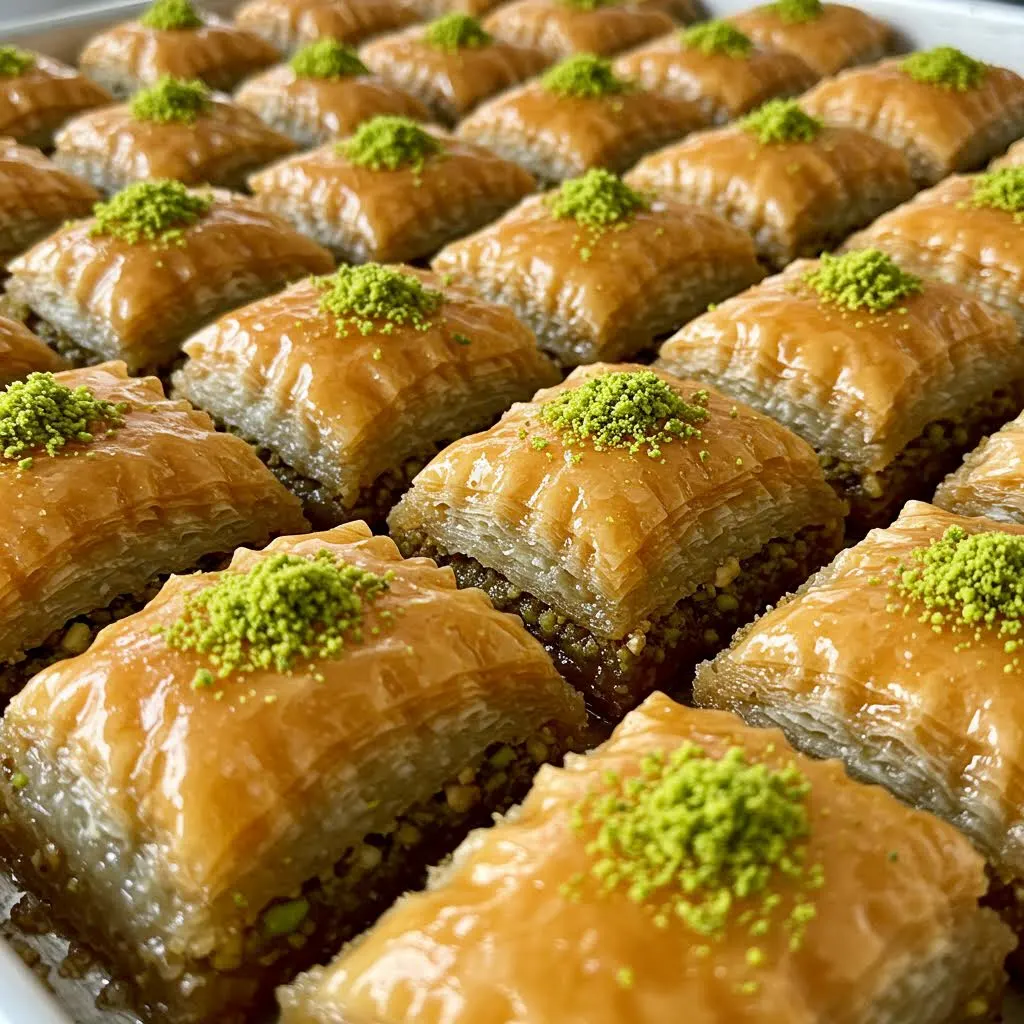
Traditional Baklava Recipe
Creating baklava involves a meticulous process of layering and flavoring. Here is a standard recipe that captures the essence of this exquisite dessert.
Ingredients:
- Phyllo pastry: 1 package ready-made
- Melted butter or oil: as needed
- Nuts (pistachios, walnuts, or almonds): approximately 300 grams, finely chopped
- Sugar: approximately 250 grams
- Cinnamon: to taste
- Water, sugar, and honey/rose water/lemon juice for the syrup
Preparation Steps:
Preparing the Syrup
Begin by preparing the syrup. Combine sugar and water in a saucepan and bring to a boil. Once it reaches a boil, add honey, rose water, and a dash of lemon juice. Allow the syrup to cool completely before use.
Assembling the Baklava
Chop the nuts finely and mix with sugar and cinnamon. Prepare the phyllo by laying a sheet on a baking tray, brushing it with melted butter or oil. Repeat this process for about 8 to 10 layers. Spread half of the nut mixture evenly over the layered phyllo.
Continue layering with another 4 to 5 sheets of phyllo, each brushed with butter or oil. Add the remaining nuts, then finish with the remaining phyllo sheets, again brushing each with butter or oil.
Cutting and Baking
Before baking, cut the baklava into diamond, square, or rectangular shapes using a sharp knife. Bake in a preheated oven at 175°C for 45 to 60 minutes, or until the top is golden brown.
Adding the Syrup
As soon as the baklava is out of the oven, pour the cold syrup evenly over the hot pastry. This ensures that the syrup is well absorbed, giving the baklava its signature sweetness and texture.
Serving
Allow the baklava to sit at room temperature for several hours to let the syrup fully penetrate the layers. Once ready, serve and enjoy the rich flavors.

Persian Touches
In Iran, baklava is often scented with rose water and cardamom, adding a distinct Persian flair. These ingredients not only enhance the flavor but also provide an aromatic experience that is deeply rooted in Persian culinary traditions.
Baklava’s enduring popularity is a testament to its rich history and the role it plays in cultural exchanges across regions. Whether enjoyed as a special treat or a festive dessert, baklava continues to be a symbol of culinary artistry and tradition.